What documents are needed before exporting the signal jammer: frequency band, site boundaries, tags, and delivery list.
From national frequency bands and field boundaries to labels, packaging, and batch acceptance, we compiled the preliminary information for the export signal jammer project.
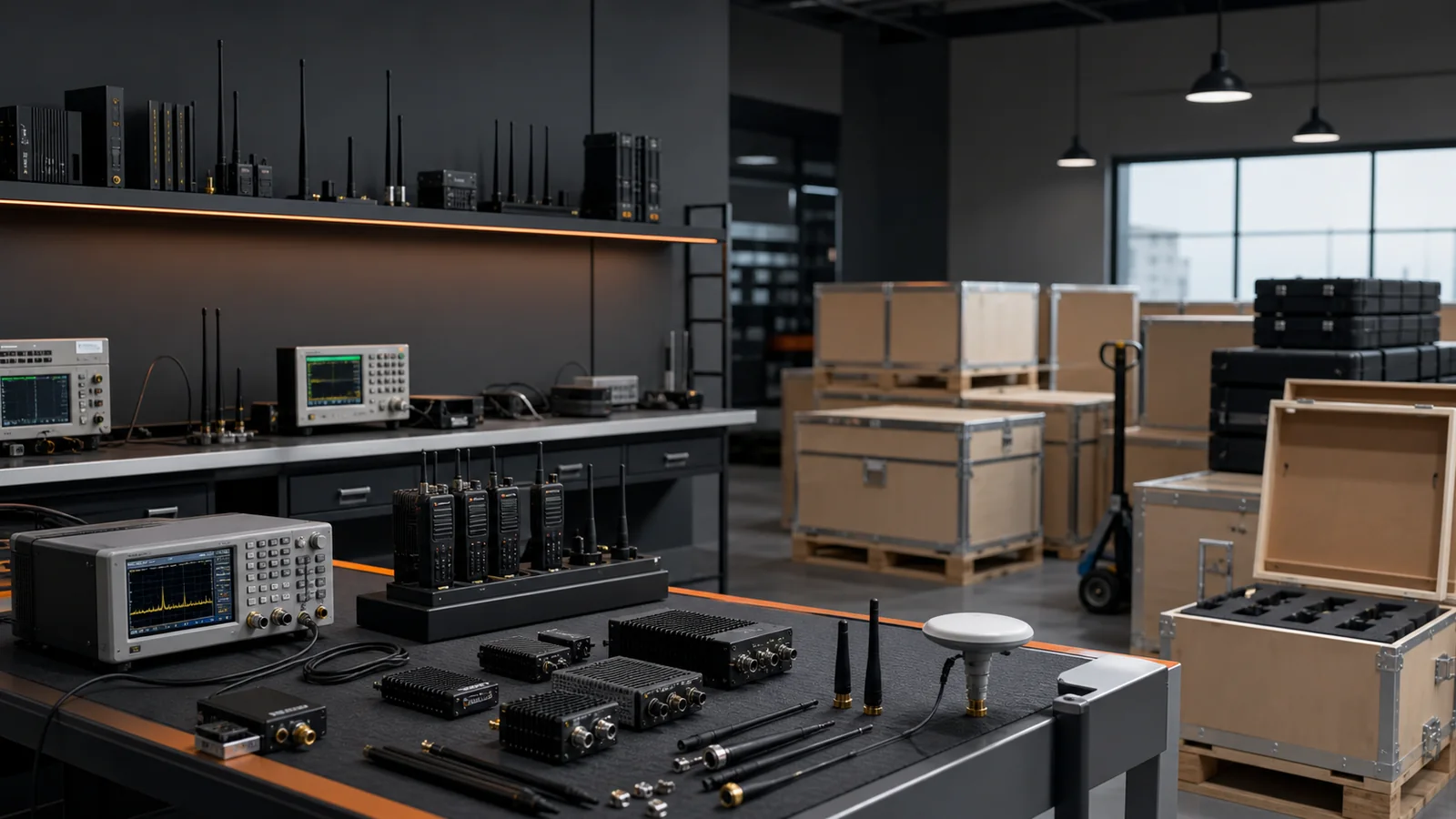
For the signal jammer export project, the real factor affecting delivery efficiency is often not whether the product is in stock, but whether the preliminary documentation is complete. If the target country, operator frequency band, authorization scope, tags, power supply, instruction manual, and acceptance records are not confirmed before quoting, both samples and bulk orders may require rework in later stages.
First step: Provide information on the country, city, and carrier.
The signal jammer mobile phone, signal jammer WiFi, and 5G signal management equipment cannot simply copy a fixed frequency band list to all countries. When requesting export quotes, please provide the target country, city, major operators, and the communication types (e.g., mobile calls, mobile data, 2.4G or 5G WiFi) that the project needs to manage. We will verify the frequency band groups in the product documentation against the project requirements accordingly, avoiding reliance on the name “multi-band” for clarification.
Second item: Describe the site and the boundaries of legal authorization.
signal jammer is a regulated wireless device. The purchaser should first confirm local requirements regarding import, sale, possession, installation, and use, and clearly define the authorized rooms, floors, time periods, and coverage boundaries. It should also be specified which adjacent areas must maintain normal communication. A site plan, room dimensions, door and window orientations, floor locations, and primary signal testing will help determine whether omnidirectional, directional, external antennas, splitter adjustment, or network management methods are used.
Nominal distance cannot replace field testing. Signal strength may be stronger near base stations, windows, or high floors; building walls, doors, windows, and adjacent areas can also alter the actual deployment. Formal quotations should include equipment locations, authorized areas, and boundary acceptance methods in the technical confirmation documents.
Third item: Clearly specify the product configuration and export label.
When confirming the model number, the frequency bands to be managed, number of channels, antenna type, control method, total power consumption, installation method, and network conditions should be specified item by item. For overseas delivery, voltage, plug, equipment nameplate, warning information, packaging labels, instruction manual language, and spare parts should also be confirmed. If the customer requires the Jiakang Secure brand, distributor label, or OEM/ODM packaging, the document format, quantity, and delivery time should also be confirmed during the quotation stage.
| Data Category | It is recommended to confirm in advance. | Reserved upon delivery |
|---|---|---|
| Technical configuration | Country, operator, frequency band, channel, antenna and control method | Model list, configuration list and version history |
| On-site conditions | Plan view, locations, power supply, network, and boundaries | Installation diagrams, equipment serial numbers, and acceptance records |
| Export documents | Voltage, plug, language, label, packaging and accessories | Packing information, instruction manual and batch information |
Fourthly: Samples, small batches, and bulk orders must use the same set of standards.
During the sample stage, the appearance, interfaces, nameplates, manuals, packaging, and basic compatibility with the target country should be confirmed. During the project stage, additional site, frequency band, network, and boundary testing should be conducted. For batch delivery, the batch number, quantity, configuration version, accompanying materials, and packaging labels should be verified for consistency. For network management models such as the LMT-8010C, IP addresses, user permissions, timing, alarms, logs, and after-sales responsibilities should be determined in advance to avoid network planning being done only after the equipment arrives on-site.
Fifth item: Acceptance documents must be verifiable.
It is recommended to save records by device serial number, including baseline data before power-on, testing within the authorized area, impact outside the boundary, communication recovery after shutdown, network status, and anomaly handling records. The data should be traceable to the specific country, location, model, channel, point of contact, and date. Jiakang Secure communication frequency bands, configurations, languages, power supplies, packaging, and bulk delivery arrangements can be made according to the customer’s region and country, but this does not replace permission or regulatory review by local authorities.
Minimum Information List Before Inquiry
- Target countries, cities, and major operators;
- Legally authorized use cases, time periods, and coverage boundaries;
- Room dimensions, floor plan, on-site photos, and main frequency band tests;
- Product type, quantity, sample or bulk plan;
- Power supply, plug, language, labeling, packaging, and delivery requirements.
After preparing this information, you can first review the signal jammer product specifications and then submit your request through the project solutions or inquiry page . All signal jammer and related equipment are for legally authorized uses only and in compliance with local regulations.
Prepared/Reviewed by: Jiakang Secure Technical Documentation Team. Content is compiled based on existing product documentation and project selection logic, and does not replace local regulatory review, spectrum licensing, or on-site testing.
Do I need to customize signal jammer according to the country and site?
Send the target country, operator, site type, coverage boundary, quantity, and control method, and we will confirm the model and frequency band accordingly.